
Does Shockwave Therapy Work for Tendonitis? When It Helps and What to Expect
If you’ve been dealing with tendon pain for months despite rest, stretching, or physical therapy, you may need a different approach to recovery.
Shockwave therapy, also known as acoustic wave therapy, can help reduce pain and improve function in certain tendon injuries by stimulating the body’s natural healing response. It can be particularly beneficial for persistent tendon problems that have not responded adequately to other conservative treatments.
At Recharge Sports Injury Center in Ashburn, VA, Dr. Bruce Short, DC, brings more than 25 years of chiropractic and sports injury treatment experience to helping patients overcome these stubborn injuries. His approach combines shockwave therapy with targeted soft tissue treatments and rehabilitation to address both the affected tendon and surrounding structures.
Why Do Some Tendon Injuries Refuse to Heal?
Tendons connect muscles to bones, allowing your body to transfer force and produce movement. Every time you run, lift weights, swing a golf club, or climb stairs, your tendons are working.
When a tendon is repeatedly placed under more stress than it can tolerate, it can become painful and develop structural changes over time.
Many patients assume their injury will eventually resolve on its own. They reduce their activity, wait for the pain to disappear, and then return to their normal routine. Unfortunately, the discomfort may return as soon as they place the tendon under stress again.
In Dr. Short’s experience, the longer a tendon injury persists, the more complex it can become to treat. Chronic changes within the tendon and restrictions in the surrounding muscles may also need to be addressed.
Tendonitis vs. Tendinosis vs. Tendinopathy
Although these terms are often used interchangeably, they describe different aspects of tendon injuries.
- Tendonitis: Inflammation or irritation of a tendon, often associated with a relatively recent injury or increase in activity.
- Tendinosis: Degenerative changes within a tendon, often associated with repetitive stress and an impaired healing response over time.
- Tendinopathy: A broader term used to describe tendon conditions involving pain and reduced function.
Understanding the nature of the injury helps determine which treatments may be appropriate and how long recovery could take.
How Does Shockwave Therapy Work for Tendonitis?
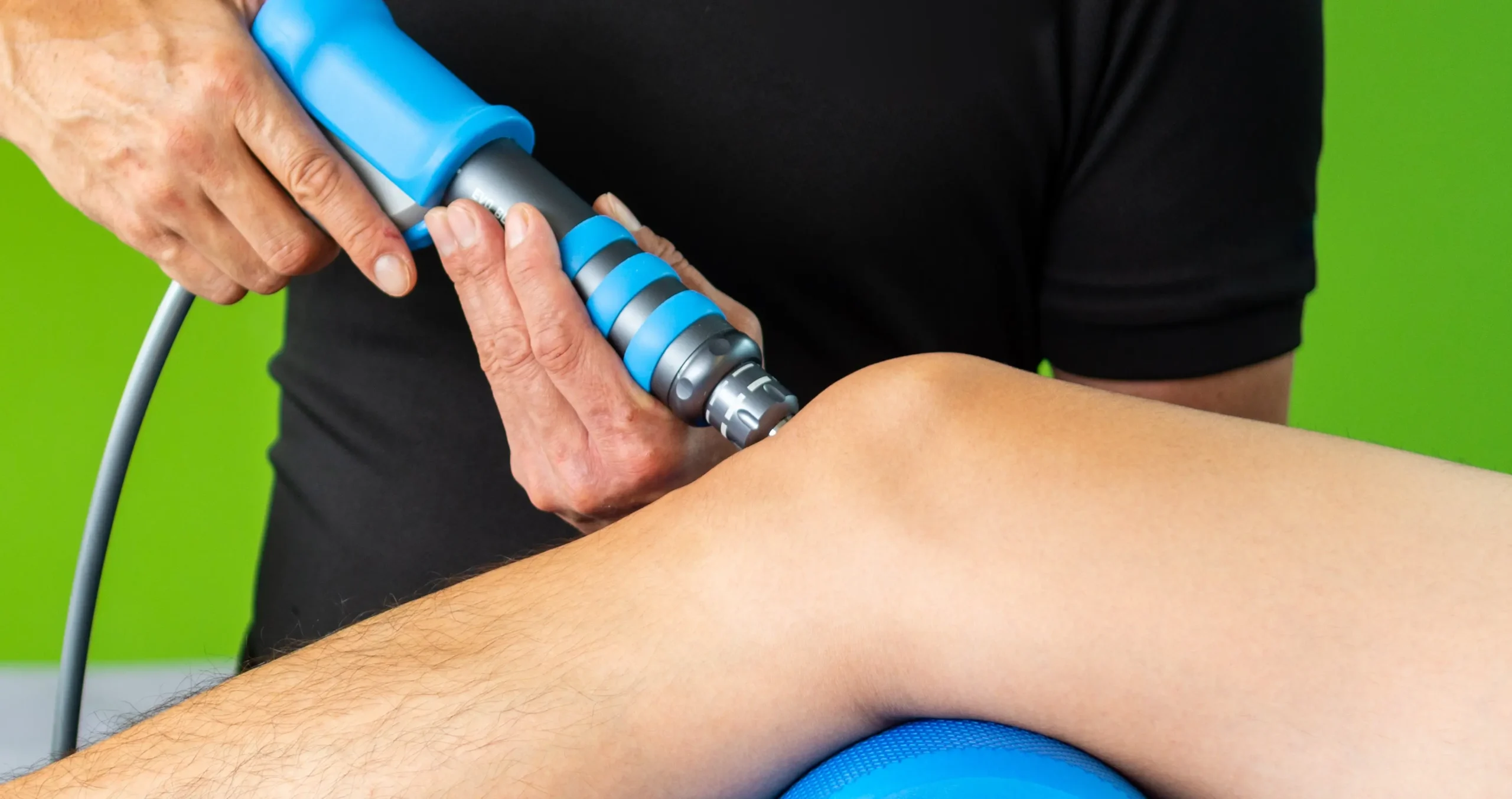
Shockwave therapy is a non-invasive treatment that delivers controlled mechanical pressure waves into targeted tissue through a handheld device.
These waves stimulate a biological response that may help:
- Improve local circulation
- Reduce tendon-related pain
- Encourage tissue remodeling
- Stimulate collagen production
- Support improvements in movement and function
For patients with chronic tendinopathy, the goal is to encourage a healing response in tissue that has struggled to recover.
Shockwave therapy does not require injections or incisions and is often incorporated into a broader rehabilitation program.
Radial vs. Focused Shockwave Therapy
There are two primary forms of treatment commonly referred to as shockwave therapy.
- Radial pressure wave therapy delivers mechanical pressure waves that spread outward from the applicator, targeting relatively superficial tissues.
- Focused shockwave therapy concentrates energy at a specific depth, allowing treatment to reach more targeted or deeper structures.
Recharge uses radial shockwave technology, which Dr. Short has worked with for many years to treat a variety of musculoskeletal injuries. Treatment intensity and application are adjusted according to the injury, treatment area, and patient’s tolerance.
What Types of Tendon Injuries Can Shockwave Therapy Help?
Shockwave therapy may be considered for several common overuse injuries affecting athletes, active adults, and people experiencing pain from repetitive everyday movements.
Tennis Elbow and Golfer’s Elbow
Tennis elbow affects the tendons on the outside of the elbow, while golfer’s elbow affects those on the inside.
Both conditions can make gripping, lifting, racquet sports, and everyday tasks uncomfortable. Shockwave therapy may be incorporated alongside treatment of the surrounding forearm muscles to help manage persistent symptoms.
Achilles Tendinopathy
The Achilles tendon experiences significant forces during running, jumping, and other athletic activities.
For patients experiencing persistent Achilles pain, shockwave therapy may complement a rehabilitation program focused on restoring the tendon’s ability to tolerate load. Its effectiveness can vary depending on the location and characteristics of the injury.
Patellar Tendinopathy (Jumper’s Knee)
Patellar tendinopathy affects the tendon connecting the kneecap to the shinbone. It is especially common in sports involving repeated jumping, landing, and changes of direction.
Shockwave therapy may be considered in selected cases, although progressive strengthening and appropriate management of training loads remain essential components of recovery.
Rotator Cuff Tendinopathy
Rotator cuff injuries can make reaching overhead, lifting weights, and performing everyday activities painful.
Certain shoulder tendon conditions, particularly those involving calcium deposits, may benefit from shockwave therapy. A thorough evaluation helps determine whether it is appropriate for the specific injury.
Shockwave Therapy vs. Class IV Laser Therapy: Why Combine Them?
One of the distinguishing features of treatment at Recharge is that shockwave therapy is rarely used in isolation.
Dr. Short compares his approach to repairing a damaged road.
“Shockwave is digging up the old road,” explains Dr. Short. “And then the class four laser is putting down the new black top.”
The analogy illustrates how he uses different treatments to address different aspects of recovery.
While shockwave therapy is intended to stimulate a remodeling response within the affected tissue, Class IV laser therapy uses light energy to support biological processes associated with tissue repair and pain management.
Depending on the injury, Dr. Short may incorporate several complementary treatments:
- Shockwave therapy: Targets the affected tendon and stimulates a tissue response.
- Class IV laser therapy: Supports tissue recovery and pain management.
- Active Release Technique (ART): Addresses soft tissue restrictions in the surrounding muscles.
- Dry needling: Helps manage muscular tension and trigger points.
- Rehabilitation exercises: Gradually rebuild strength, movement, and the tendon’s ability to tolerate stress.
Rather than relying on one treatment to accomplish everything, Recharge develops an individualized plan based on the condition of the tendon, surrounding tissues, and functional limitations.
How Long Does Shockwave Therapy Take to Work?
The number of treatments needed depends on the severity of the injury, how long symptoms have been present, and how the patient responds to care.
At Recharge, shockwave therapy is typically performed once per week. Additional treatments, such as laser therapy and soft tissue work, may be performed during other appointments.
Based on Dr. Short’s clinical experience, a comprehensive treatment plan may follow these general timelines:
| Condition | Typical Total Treatment Visits | Estimated Treatment Period |
| Recent tendonitis | 6–10 visits | 2–3 weeks |
|---|---|---|
| Chronic tendinosis | 10–24 visits | 2–3 months |
These estimates refer to the complete treatment plan, not the number of shockwave sessions alone. Recovery timelines vary, and longstanding or recurring injuries may require additional rehabilitation.
How Do You Know When a Tendon Has Fully Recovered?
A reduction in pain is an encouraging sign, but it is not the only measure of recovery. A tendon that no longer hurts during everyday activities may still lack the strength or capacity necessary to withstand the demands of exercise or competitive sports.
At Recharge, Dr. Short uses resistance testing to evaluate how well the affected muscle and tendon tolerate force. For example, when assessing an elbow injury, he may apply resistance to the patient’s hand to evaluate strength, stability, and discomfort around the tendon attachment.
“There are some times that people will come in and they say, ‘I have no pain.’ But then when we test it, you know, it still drops,” explains Dr. Short.
Functional recovery involves more than pain relief. Improvements in strength, movement, load tolerance, and the ability to perform sport-specific activities all help guide decisions about returning to normal activity.
Get Back to Doing What You Love
Persistent tendon pain doesn’t have to become a permanent limitation on your active lifestyle.
Whether you’ve been struggling with tennis elbow, Achilles pain, or another recurring soft tissue injury, identifying the nature of the injury is an important first step toward recovery.
At Recharge Sports Injury Center in Ashburn, VA, we combine shockwave therapy for tendonitis with advanced chiropractic care, soft tissue treatments, and rehabilitation to develop a recovery plan tailored to your needs.
Schedule an appointment with Dr. Bruce Short to explore your treatment options and get back to the activities you enjoy.